
Lombok Dry Season Looks Perfect – But Here Is What Most Travelers Get Wrong
Lombok dry season is widely considered the best time to visit the island – sunny skies, calm seas, and picture-perfect conditions for exploring beaches and surf spots. But after spending multiple dry seasons on the ground in Kuta Lombok, the reality is a little more nuanced than the travel blogs suggest.
Many travelers arrive expecting paradise with zero friction. What they find instead: packed beaches by 10 AM, accommodation prices that doubled since they last checked, and the kind of exhaustion that comes from doing too much too fast under an unforgiving equatorial sun.
This guide is built on real experience – not just research. It covers the 7 most important things you need to know before visiting Lombok dry season so you can plan smarter, move better, and actually enjoy your time here instead of just surviving it.
Lombok Dry Season Weather – What It Really Feels Like
Lombok dry season runs from May to October, peaking between July and August. The weather is consistent: minimal rainfall, low humidity, and reliable sunshine from morning to evening. For outdoor activities and beach days, it genuinely is the best window.
But the thing most travel content gets wrong is how the heat actually feels.
What to realistically expect:
- Temperatures between 27°C to 33°C during peak hours
- Sun intensity is significantly stronger near the coast than inland – sunscreen every 2 hours is not optional
- Mornings (before 9 AM) are noticeably cooler and more comfortable for activities
- Afternoons between 12 PM and 3 PM can feel brutal, especially on open beaches with no shade
- Sea breezes help along the coast, but inland areas like central Kuta can feel stifling
The practical shift: Build your days around the weather, not against it. Beaches before 10 AM, lunch rest from 12–3 PM, then back out in the late afternoon for golden hour. Travelers who follow this rhythm have a dramatically better experience than those who try to push through the heat.
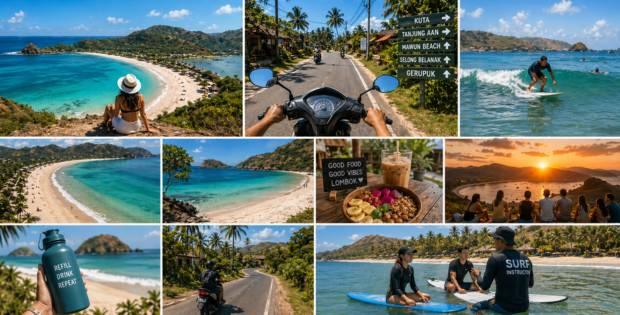
Insider tip: Carry a reusable water bottle and refill it – dehydration in Lombok dry season happens faster than you expect, especially on scooters where the wind masks how hot you actually are.
Peak Season Reality and How to Avoid the Crowds
Lombok dry season and peak travel season are essentially the same window – June to August draws the largest number of visitors, both domestic and international. This is when Kuta Lombok transforms from a quiet surf town into something considerably busier.
What actually changes during peak months:
- Tanjung Aan and Selong Belanak reach capacity by midday on weekends
- Popular warungs and restaurants fill up fast after 7 PM – arriving at 6:30 PM makes a real difference
- Accommodation rates in Kuta Lombok increase by 30 to 60% compared to shoulder months (May, September, October)
- Rental scooter availability tightens – book yours the day before, not the morning you need it
- Traffic on the main Kuta road becomes noticeably slower during morning and evening hours
How smart travelers adjust:
- Hit the main beaches before 10 AM – you will often have them largely to yourself
- Explore lesser-known beaches like Mawun and Rowok on peak days instead of competing for space at Tanjung Aan
- Book your accommodation at least 3 to 4 weeks in advance for July and August to secure good rates
- Travel on weekdays whenever possible – weekends bring an influx of domestic day-trippers from Mataram and Lombok’s northern towns
Insider tip: The weeks just before and after peak – late May, early June, late August into September – offer near-perfect dry season weather with noticeably fewer crowds. This is the sweet spot that most visitors miss because they follow conventional school holiday timing.
Accommodation Strategy That Saves Time and Money
During Lombok dry season, where you stay matters more than how much you pay. This is one of the most common and costly mistakes travelers make: booking the cheapest option available without thinking about location, then spending hours and significant fuel money on daily transportation.
The location math is simple:
A stay 15 km from Kuta center might save you IDR 100,000 per night but costs you 30 to 60 minutes of riding in each direction, every single day, under a hot sun on unfamiliar roads. Over a 7-day trip, that is a lot of time and energy that could be spent on the beach instead.
What a strategic base looks like:
- Within 5 to 10 minutes of Kuta Lombok center for easy access to food, shops, and rental services
- Close to at least one main beach road – ideally within 15 minutes of Selong Belanak or Tanjung Aan
- Access to reliable WiFi if you are working remotely
- Proximity to a main road makes scooter navigation significantly easier in the first few days
When to book:
| Period | Booking Window | Expected Price Range | Hotel Category |
| May – June | 2 weeks ahead | IDR 300,000 – 600,000/night | ★★★ Mid-range |
| July – August (peak) | 3–4 weeks ahead | IDR 500,000 – 1,000,000/night | ★★★ Mid-range |
| July – August (peak) | 3–4 weeks ahead | IDR 1,000,000 – 2,500,000/night | ★★★★ Upper-mid |
| September – October | 1–2 weeks ahead | IDR 280,000 – 550,000/night | ★★★ Mid-range |
Prices are general estimates for mid-range accommodation in the Kuta Lombok area.
Insider tip: Eco stays and nature retreats just outside the main Kuta strip – like those in the Mandalika area – often offer better value than centrally located hotels while still keeping you within 15 to 20 minutes of every major beach. They also tend to be significantly quieter during peak weeks.
Best Beaches for Every Travel Style
Not all beaches in Lombok in dry season deliver the same experience. Choosing the right beach based on your actual travel style- not just what looks good on Instagram- makes a real difference in how you spend your days.
Beach guide by travel style:
| Beach | Best For | Crowd Level (Peak) | Notes |
| Tanjung Aan | Scenic views, relaxing, photography | High by midday | Two distinct bays; arrive before 9 AM |
| Selong Belanak | Beginner surfing, long sandy beach, families | Medium-High | Long crescent beach, gentle waves on inside |
| Mawun | Quiet atmosphere, swimming, couples | Low-Medium | Sheltered bay, consistently calm water |
| Rowok | Hidden gem, minimal crowds | Low | Short hike to access; worth the effort |
| Gerupuk | Surfing (all levels), boat access to breaks | Medium | Multiple breaks inside and outside the bay |
The common mistake to avoid: Trying to visit three or four beaches in one day. It sounds achievable on the map, but the combination of distances, sun exposure, and riding time leaves most travelers exhausted before sunset. Pick one or two beaches per day and commit to them fully.
Insider tip: Mawun Beach on a weekday morning in dry season is one of the most underrated experiences in all of Lombok- calm turquoise water, almost nobody there, and a natural shade tree along the shoreline. Do not sleep on this one.
Transportation Reality Most Travelers Do Not Expect
Transportation in Lombok is simple in principle but has real friction in practice- especially if this is your first time on the island.
The primary options:
- Scooter rental- IDR 70,000 to 100,000/day. Offers full flexibility and is how most travelers get around. Requires basic riding confidence and a willingness to navigate unfamiliar roads.
- Private driver/car rental- IDR 350,000 to 600,000 for a half day. Worth it for longer trips, groups, or travel days when riding feels exhausting. Bluebird is available but limited outside of Mataram.
- Ojek (motorcycle taxi)- Useful for single short trips. Apps like Gojek are available in Kuta Lombok and convenient for evenings when you do not want to ride.
The honest truth about scooters:
Most roads between Kuta and the main beaches are sealed and in reasonable condition during dry season. But distances that look short on Google Maps can feel long under a midday sun. Riding from Kuta to Selong Belanak takes around 20 to 25 minutes on good days- not far, but at 31°C with direct sun, it adds up over a week.
If you are not confident on a scooter, hire a driver for your first day or two to orient yourself. It is money well spent.
Insider tip: Fuel your scooter at the official Pertamina station on the main Kuta road rather than the small roadside bottles- the quality is more consistent and it is only marginally more expensive.
Surf Conditions and What Beginners Need to Know
Lombok dry season is widely regarded as the best surfing window in the region. Consistent offshore winds, regular swell, and clean conditions make it attractive for surfers of all levels- but the level matching part is where many beginners go wrong.
Why dry season produces good surf:
- Southeast trade winds create consistent offshore conditions, particularly in the morning
- Swell from the Indian Ocean arrives regularly between June and September
- Wave faces are cleaner and more defined compared to wet season chop
Surf spot guide by level:
Beginner:
- Selong Belanak (inside)- Long, slow, forgiving waves. Surf schools available. The best starting point on the island.
- Gerupuk (inside bay)- Mellow peaks accessed by short boat ride. Multiple instructors available locally.
Intermediate to Advanced:
- Gerupuk (outside)- Faster, hollower, requires paddling strength and boat access
- Mawi- Powerful left-hander over reef. Not for the inexperienced. Best approached with a local guide.
- Grupuk left and right- Various peaks depending on swell direction
The critical mistake beginners make: Arriving during a solid swell and heading straight to Mawi or Outside Gerupuk because they look impressive. Reef breaks in dry season swells are genuinely dangerous for anyone not yet comfortable reading waves. Start at Selong Belanak for at least two or three sessions before progressing.
Insider tip: Surf lessons at Selong Belanak range from IDR 250,000 to 350,000 per session including board rental. Book directly with instructors on the beach rather than through resort packages- same quality, significantly lower price.Prepare your budget to visit some places and activity in Lombok dry season.
Local Experience, Common Mistakes, and How to Travel Smarter
Lombok dry season brings the island alive in ways that genuinely set it apart from the wet season experience. More warung and cafe options are open, tours and boat trips run reliably, remote areas become accessible, and the overall energy is higher.
But the same peak activity that makes things more available also creates the conditions for the most common travel mistakes.
What improves significantly in Lombok dry season:
- Day trips to the Gili Islands run on reliable schedules with multiple operators
- Trekking to Rinjani base camp and summit is best attempted May through September
- Boat access to outer surf breaks like Outside Gerupuk is more consistent
- Sunset spots like Merese Hill are reliably spectacular and accessible year-round but best in clear dry season skies
The mistakes that quietly ruin dry season trips:
- Booking accommodation too late- July and August availability in Kuta drops fast. If you have fixed travel dates, lock in your stay at least 3 to 4 weeks ahead.
- Choosing location based on price alone- Covered in section 3, but worth repeating: a poorly located cheap stay will cost you more in time, fuel, and energy than the price difference saves.
- Underestimating sun exposure- SPF 50+, reapply every 2 hours, wear a rash guard in the water. Severe sunburn on day 2 of a 10-day trip is not uncommon and it will genuinely limit what you can do during Lombok dry season
- Trying to do too much- Lombok is not large on a map but distances under equatorial sun are genuinely tiring. Three to four solid experiences per day beats seven rushed ones.
- Not carrying enough cash- ATMs in Kuta Lombok work but occasionally run out of cash during peak weekends. Withdraw enough to cover two to three days at a time.
Insider tip: The quietest and most atmospheric time at any beach in Lombok dry season is 6:30 to 8:30 AM. The light is golden, the air is cool, and most other travelers are still at breakfast. Build at least one early morning beach session into your trip.
Plan Smart and Make Your Lombok Dry Season Trip Unforgettable
Lombok dry season genuinely delivers- the weather, the waves, the beaches, and the pace of island life are all at their best between May and October. But the difference between a trip that feels effortless and one that feels like work comes down entirely to preparation.
Choose your base wisely. Time your beach days around the sun. Book ahead during peak months. And resist the urge to rush through everything in a week.
If you want a starting point that puts you close to everything- beaches, surf spots, and Merese Hill’s legendary sunsets- RaCottage Mandalika sits just 22 minutes from Merese Hill and within easy reach of Kuta’s main beaches. [Check availability and book your stay here →]. Lombok Dry Season is time to explore Kuta Lombok.
FAQ: Lombok Dry Season
What is the best month to visit Lombok dry season? May, June, and September offer the best combination of dry season weather and manageable crowd levels. July and August are peak months with higher prices and busier beaches but still excellent conditions overall.
How hot is Lombok dry season? Temperatures typically range from 27°C to 33°C during the day. The heat feels more intense near the coast due to direct sun reflection off sand and water. Mornings are cooler and more comfortable for outdoor activities.
Is Lombok dry season good for beginner surfers? Yes- Selong Belanak and Inside Gerupuk are both beginner-friendly during dry season with consistent small to medium waves and multiple surf schools operating. Avoid reef breaks like Mawi until you have developed solid surfing fundamentals.
How far in advance should I book accommodation for Lombok dry season? For July and August travel, book 3 to 4 weeks ahead minimum. For May, June, September, and October, 1 to 2 weeks is generally sufficient(Lombok dry season), though earlier is always better for popular properties.
What should I pack for Lombok dry season? SPF 50+ sunscreen (and plan to buy more on arrival), lightweight breathable clothing, a reusable water bottle, a basic scooter-friendly daypack, reef-safe sunscreen if you plan to snorkel, and a light layer for evenings, which can be cooler than expected near the coast.
Is Lombok worth visiting outside of dry season? Yes, but with different expectations. Wet season (November to April) brings occasional heavy rain, rougher surf, and some beach closures- but also significantly lower prices, fewer tourists, and a quieter, more local atmosphere that many travelers actually prefer.
Planning your Lombok dry season trip? RaCottage Mandalika offers eco-friendly accommodation just 22 minutes from Merese Hill, 7 minute to kuta beach- perfectly positioned for exploring Kuta’s beaches, surf spots, and hidden gems without the daily transportation stress. [Check availability ].
by:kitapixel – Digital Collaborator